
For centuries, humans have used light to mark moments of meaning. Few traditions show this more clearly than Christmas lights. What began as fragile candle flames placed carefully on evergreen branches has evolved into millions of glowing LEDs visible from space. The story of Christmas lights is not just about decoration—it reflects changes in technology, culture, and how we shape the night itself.
The Origins: When Light Meant Risk and Reverence
The tradition of decorating trees with light dates back to 16th-century Germany. Early Christmas trees were illuminated with real candles, attached to branches using wax or metal clips. These lights were beautiful but dangerous. Fires were common, and lighting a tree required constant supervision.
At the time, the candlelight carried deep symbolic meaning. It represented hope, warmth, and the presence of life during the darkest days of winter. Light was scarce, precious, and temporary—something to be admired quietly, not taken for granted.
The Electric Turning Point
Everything changed at the end of the 19th century. In 1895, the White House Christmas tree was decorated with electric lights for the first time. By the early 20th century, strings of electric bulbs became commercially available, though they were still expensive and largely limited to wealthy households.
By the 1930s, colored bulbs were common, and Christmas lights began to move beyond private homes. City streets, shop windows, and public squares embraced festive lighting as a way to attract crowds and create a shared holiday atmosphere. Light became safer, brighter, and more accessible.
Color, Excess, and Nostalgia
As technology advanced, Christmas lights grew bolder. Multicolored bulbs, tinsel, foil garlands, and flashing displays became popular—especially in the mid-20th century. These decorations reflected optimism, abundance, and post-war consumer culture.
Interestingly, many of these styles are now returning. In recent years, colorful and playful Christmas lights have come back into fashion, replacing the minimalist white-light trend of the early 2000s. The appeal is nostalgic. For many people, bright colors recall childhood memories and a time when Christmas felt louder, messier, and more joyful.
The LED Era: Brightness Without Limits
The introduction of LED technology transformed holiday lighting completely. LEDs are cheap, energy-efficient, durable, and extremely bright. Homes that once used a single string of lights can now support thousands without worrying about electricity costs or safety.
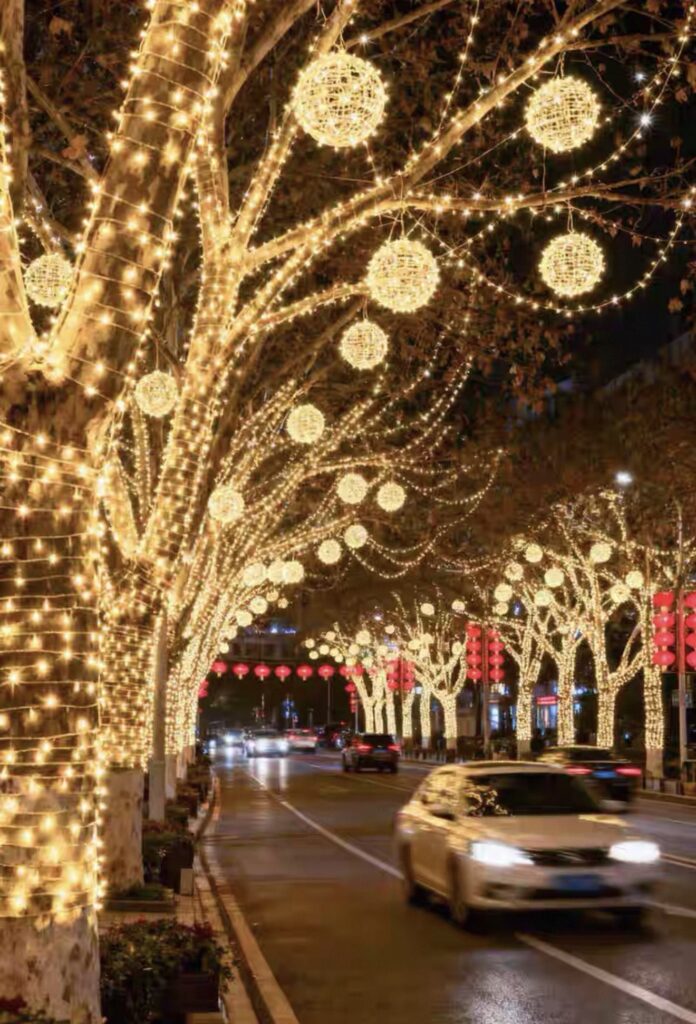
But this efficiency has a hidden consequence. Satellite images show that during the holiday season, some communities become up to 50 percent brighter than usual. Christmas lights now contribute noticeably to global light pollution, adding to the constant glow that already surrounds cities.
When Celebration Disrupts the Night
Light pollution does more than hide the stars. It affects wildlife, disrupts human sleep cycles, and alters natural ecosystems. Birds can become disoriented by artificial light, insects are drawn away from natural habitats, and even plants respond to extended artificial daylight.
What makes Christmas lighting unique is its emotional weight. Unlike streetlights or billboards, holiday lights are tied to tradition, comfort, and celebration. This makes it harder to question their impact. Turning off Christmas lights can feel like turning off the holiday spirit itself.
Today, as lighting becomes brighter and more accessible than ever, the challenge is learning how to use it with intention. Design, tone, and timing matter as much as brightness itself.
At Sanhao Lights, we believe festive lighting should enhance atmosphere rather than overwhelm it. By focusing on warm tones, thoughtful design, and responsible use of light, we aim to carry forward the original spirit of holiday lighting in a modern way.
Rethinking How We Use Light
The history of Christmas lights shows a clear pattern: each new technology allows us to use more light, more easily, and more freely. What began as a single candle has become a glowing network visible from space.
The challenge now is not to abandon the tradition, but to rethink it. Warmer tones, shorter lighting hours, and more intentional designs can preserve the magic without overwhelming the night. In doing so, we might reconnect with the original meaning of Christmas light—not brightness for its own sake, but warmth, care, and presence in the dark.
Leave a Reply